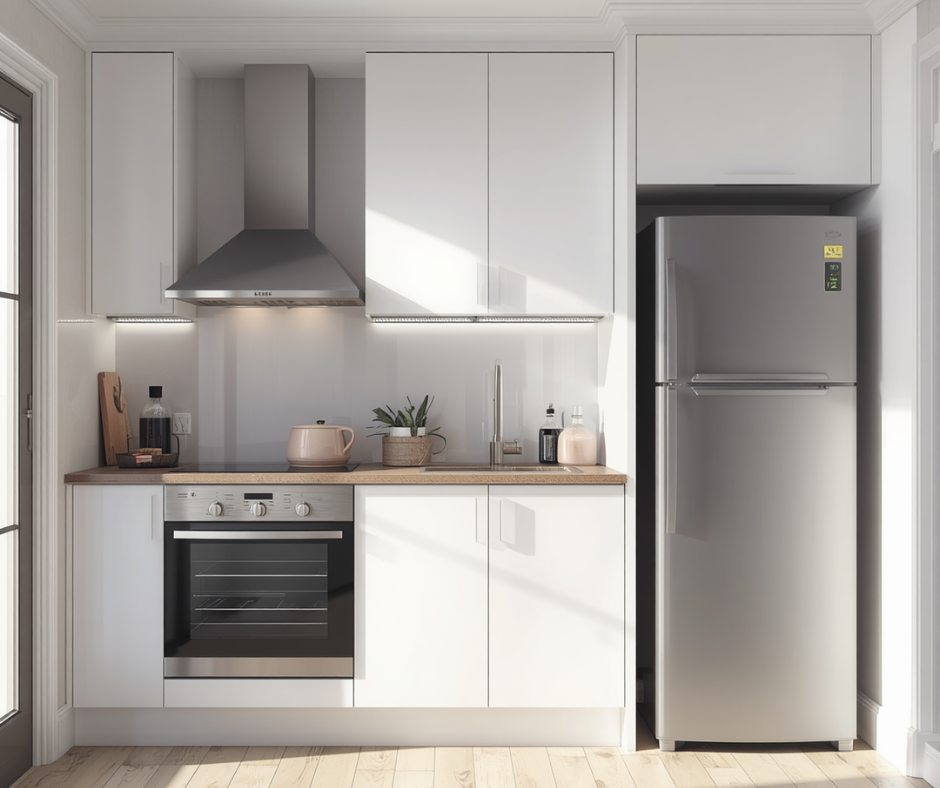
Must-Have Appliances for Tiny Kitchens That Save Space and Actually Get Used
A tiny kitchen can get crowded fast, especially when the wrong appliances start taking over valuable counter and cabinet space. If you are trying to figure out the must-have appliances for tiny kitchens, the goal is not fitting in more gadgets. It is choosing small kitchen appliances that save space, work hard, and make daily cooking easier without creating more clutter.
Why Tiny Kitchens Feel Overwhelming So Quickly
A small kitchen does not usually fail because it is too small.
It fails because too many things are trying to live there at once.
That is why tiny kitchens can feel frustrating even when they are clean. One coffee maker, one toaster, one blender, a bulky dish rack, and a rarely used air fryer can suddenly leave almost no room to prep food. Then every meal starts with moving things around just to make space.

The real problem is not just size. It is appliance math.
Every appliance in a tiny kitchen has to earn its footprint. If it only does one job, gets used twice a month, and takes up a full shelf or permanent counter space, it is probably costing more than it is helping.
Here is the counterintuitive part: tiny kitchens usually work better with fewer but better appliances, not more compact versions of everything. A smaller gadget is still clutter if it solves a problem you do not actually have.
And here is my strong opinion: a tiny kitchen should not be stocked like a suburban dream kitchen scaled down. That is how small kitchens become annoying instead of efficient.
1. A Compact Toaster Oven That Replaces Multiple Appliances
If there is one appliance that often makes the most sense in a tiny kitchen, it is a compact toaster oven.
Why? Because it can handle toast, reheating, roasting, baking, broiling, and small-sheet-pan meals without demanding the kind of commitment or space that multiple separate appliances do. In many homes, it can reduce the need for a toaster, cut down on microwave use, and make the main oven less necessary for smaller cooking jobs.
This works especially well in kitchens where cooking for one or two people is common. Heating a full-size oven for a few roasted vegetables, a baked potato, or an open-faced sandwich is inefficient and often unnecessary.
Real-life scenario: if your counter already holds a coffee maker and a dish drainer, adding both a toaster and an air fryer may push the kitchen into constant clutter. A well-sized toaster oven can often cover enough of those jobs to eliminate at least one extra appliance.
The mistake people make is buying the biggest toaster oven they can fit. In a tiny kitchen, oversized appliances defeat the point. You want one that handles real meals without swallowing the whole counter.
2. A Slim Coffee Maker or Single-Serve Brewer That Fits Your Actual Routine
Coffee appliances are one of the biggest space decisions in a small kitchen because they often stay out all the time.
That means the right choice is not about what looks nicest. It is about what fits your real morning routine.
If one person drinks one or two cups every morning, a slim single-serve brewer or compact drip machine usually makes more sense than a large multi-function coffee station. If two people drink coffee daily, a narrow 5-cup or compact programmable model may be a better fit than a full-size machine with a wide base and oversized carafe.
Why this matters is simple: permanent counter appliances need to justify permanent space.
A coffee maker is often worth that space because it gets used constantly. But a coffee maker plus espresso machine plus milk frother plus pod carousel is usually too much for a tiny kitchen unless coffee is truly the center of the household.
A simple fix that works well is grouping coffee supplies on a small tray. That keeps mugs, sweetener, and pods or filters visually contained so the setup feels intentional instead of scattered.

3. A Blender That Matches What You Actually Make
Blenders are one of the easiest appliances to overbuy.
A massive blender with a huge base and extra attachments sounds useful, but in a tiny kitchen, it can become one more bulky item that gets shoved into a cabinet and rarely used. The better choice is usually a compact blender or personal blender that suits the way you really cook.
If you make smoothies several times a week, a personal blender is practical. If you make soups, sauces, dressings, and batters more often, a compact full-base blender may be the better call. What you do not want is buying for fantasy cooking.
Real-world example: if your breakfast routine includes frozen fruit, protein powder, and almond milk most mornings, a personal blender deserves space. If you made two smoothies last summer and mostly use an immersion blender for soups, a giant countertop blender is taking up room it has not earned.
This is where small kitchens benefit from honesty. Appliance decisions should be based on repeat behavior, not good intentions.
4. An Immersion Blender for Small-Space Flexibility
If you cook often and have limited space, an immersion blender is one of the smartest appliances you can own.
It solves a surprising number of kitchen problems without needing much room. It works for soups, sauces, salad dressings, whipped mixtures, and even some smoothie-style blending jobs. It also stores more easily than a traditional blender and creates less cleanup in many cases.
This is one of the best examples of a space-saving kitchen appliance that punches above its size.
The reason it works so well in tiny kitchens is that it removes the need for a large pitcher-style appliance in many situations. You can blend directly in a pot, bowl, or jar and put it away in a drawer or small cabinet afterward.
That makes it especially valuable in kitchens where cabinet space is limited, and counters need to stay as open as possible for prep.
5. A Rice Cooker Only if It Pulls Double Duty
A rice cooker can be a great appliance, but in a tiny kitchen, it should not get an automatic pass.
This is one of those items people recommend constantly, but whether it deserves space depends on how often it gets used and what else it can do. If you cook rice, grains, oatmeal, or steamed vegetables several times a week, a compact rice cooker can be extremely helpful. If you make rice once every two weeks, it may not be worth dedicating precious storage space to it.
That is the strong opinion here: appliances that only make sense in theory are expensive clutter.
A rice cooker becomes much more valuable in a tiny kitchen when it helps with multiple jobs. Some compact models handle rice, quinoa, steaming, and simple one-pot meals. That kind of versatility matters.
Real-life scenario: if your stove only has limited burner space and you regularly make rice while cooking a main dish in a skillet, a rice cooker can free up the stovetop and simplify dinner. In that case, it earns its place.
6. A Small Electric Kettle That Speeds Up More Than Tea
Electric kettles are often underrated in American kitchens, but they can be incredibly useful in small spaces.
Most people think of them only for tea, but they also speed up oatmeal, instant soups, pour-over coffee, noodles, and even prep for cooking when you need boiling water fast. In a tiny kitchen, anything that saves time and reduces stovetop congestion has real value.
The reason a kettle works well is that it is fast, compact, and easy to store when not in use. It is also one of the few appliances that can improve kitchen function without creating much visual clutter.
If your morning routine includes tea, French press coffee, or quick breakfasts, this appliance can quietly become one of the hardest-working items in the room.
And unlike trendier gadgets, it tends to do exactly what it promises without requiring extra accessories or complicated cleanup.
7. A Microwave, but Only the Right Size
A microwave is still one of the most practical appliances for many homes, especially in a tiny kitchen where speed matters. But size matters just as much.
A microwave that is too large dominates the space and often forces other useful items off the counter. A smaller microwave that handles reheating, defrosting, leftovers, and simple cooking tasks is usually enough.
This is where people get into trouble. They buy based on maximum capacity instead of daily reality.
If you are not regularly heating oversized casserole dishes or cooking large family portions in the microwave, you probably do not need the biggest model available. A compact or mid-size microwave is often the better fit because it preserves more workspace and feels less imposing in a small kitchen.
A tiny kitchen needs breathing room. Even necessary appliances should not make the room feel boxed in.

8. A Hand Mixer Instead of a Stand Mixer for Most Small Kitchens
For tiny kitchens, this is one of the clearest trade-offs.
A stand mixer is wonderful, but for most small kitchens, it is not a must-have. A hand mixer is.
Why? Because it handles the majority of common baking and mixing tasks without demanding permanent storage space or a large, heavy footprint. If you bake occasionally, make whipped cream, brownie batter, cookie dough, mashed potatoes, or frosting, a hand mixer can usually do the job just fine.
A stand mixer makes sense for frequent bakers who use it constantly. But for everyone else, it often becomes a beautiful space hog.
That may sound blunt, but it is true. In a tiny kitchen, aspirational appliances are a problem.
If you bake every weekend, that is different. But if you bring out the mixer four times a year, a hand mixer is the smarter appliance by a mile.
What Tiny Kitchens Do Not Need as Often as People Think
This is where many small kitchens get off track.
They start collecting appliances that seem useful because everyone online recommends them. Air fryers, panini presses, juicers, popcorn machines, stand mixers, specialty coffee tools, oversized food processors, and waffle makers can all be great in the right home. But a tiny kitchen cannot operate on “maybe useful.”
The better question is not, “Do people like this appliance?”
It is, “Does this appliance solve a frequent problem in this kitchen?”
That question changes everything.
If your counter has a toaster oven, coffee maker, and dish rack all out, adding a large air fryer may create more stress than convenience. If your cabinets are already tight, a juicer with multiple parts is probably not helping your daily routine. If your kitchen has one good prep zone, anything that shrinks that zone should be questioned immediately.
A Simple Reset: How to Choose Appliances for a Tiny Kitchen
If your small kitchen already feels crowded, start here.
Step 1: Clear out every appliance
Put everything on the table or floor so you can see what is actually competing for space.
Step 2: Sort by frequency
Make three groups: used daily, used weekly, and rarely used.
Step 3: Keep only daily appliances on the counter
Anything that is not used almost every day should usually be stored elsewhere.
Step 4: Look for overlap
If two appliances do similar jobs, keep the one that is more versatile or easier to store.
Step 5: Protect your prep space
Do not let appliances consume the area you need for chopping, plating, and assembling meals.
Step 6: Contain supporting items
Use a tray, small bin, or riser where it makes sense so supplies around an appliance feel organized rather than spread out.
Step 7: Give every appliance a reason to stay
If you cannot explain exactly how it helps your real routine, it probably does not belong in a tiny kitchen.
The Best Tiny Kitchens Are Not Empty. They Are Edited.
A small kitchen does not need to look bare to work well.
It just needs to feel intentional.
That means a few appliances may stay out because they genuinely support daily life. But everything else should be chosen with more discipline than in a larger kitchen. Tiny kitchens reward function, restraint, and smart decisions. They do not reward appliance collecting.
When the right appliances are in place, a tiny kitchen starts feeling lighter, easier, and more capable. And that matters more than fitting in every gadget the internet says you need.
Final Thought
The best appliances for a tiny kitchen are not the ones that promise the most. They are the ones that do the most with the least space.
This post may contain affiliate links. If you purchase through these links, I may earn a small commission at no additional cost to you.