Tag: kitchen counter decor

  • Cast Iron Storage Ideas: How to Store Skillets, Dutch Ovens, and Cookware Safely

    Cast Iron Storage Ideas: How to Store Skillets, Dutch Ovens, and Cookware Safely

    Cast iron skillets are useful, durable, and worth keeping within reach, but they can also create real kitchen storage problems. If you have been searching for storage ideas for cast iron skillets, cast iron pan organization, or ways to store heavy pans in a small kitchen, the goal is not just to hide them. The goal is to store them in a way that protects your kitchen from clutter and makes cooking easier.

    Why Cast Iron Storage Becomes a Kitchen Problem So Fast

    Cast iron is one of those kitchen staples that sounds simple until you actually live with it.

    A single skillet is manageable. Two or three skillets, a grill pan, and maybe a Dutch oven lid or griddle later, and suddenly you have a heavy, awkward stack that does not fit the way regular cookware does. That is where most kitchens start to feel messy. It is not always because there is too much stuff. It is because the storage system was never designed for heavy pieces that need easy access.

    That is also why a lot of cast-iron storage advice falls flat. It tends to focus on what looks nice instead of what works when you are pulling a skillet out on a busy weeknight. A beautiful kitchen is great. A kitchen that makes dinner easier is better.

    My strong opinion on this is simple: if your cast-iron storage makes you lift three heavy pans just to reach the one you actually use, that is not organization. That is delayed frustration.

    1. The Biggest Mistake: Stacking Every Piece in One Deep Cabinet

    This is the default method in a lot of homes because it feels efficient. Put every skillet in one lower cabinet, stack them by size, and call it done.

    The problem is weight and friction. Cast iron is heavy, and stacked cast iron creates a domino effect. The pan you need is rarely the one on top. So every meal starts with moving multiple skillets, trying not to scrape seasoning, and figuring out where to set the others while you cook.

    If your counter has a toaster, blender, and coffee maker all out already, now you also have two heavy skillets temporarily sitting on the only clear prep space. That is how storage problems turn into cooking problems.

    A better fix is to stop treating cast iron like stackable lightweight cookware. Use a vertical pan organizer inside a lower cabinet instead. A sturdy metal divider rack lets each skillet stand in its own slot, which means you slide one out instead of unstacking the whole collection.

    Real-world example: if you have a 12-inch skillet, a 10-inch skillet, and a grill pan you use regularly, store them vertically in order of use rather than by size. The skillet you reach for most should be the easiest one to grab, even if it is not the smallest.

    2. Keeping Cast Iron Too Far Away From the Stove

    A lot of kitchens technically have enough storage, but the wrong items are in the wrong zones.

    Cast iron is not specialty cookware for most people who own it. It is daily-use cookware. So storing it in the far pantry cabinet, garage overflow shelf, or high upper cabinet creates a mismatch between how often you use it and how hard it is to access.

    This is where a counterintuitive insight matters: sometimes the best storage solution is not the one that hides everything best. Sometimes the better choice is to keep your most-used skillet slightly more visible if it makes the kitchen function better.

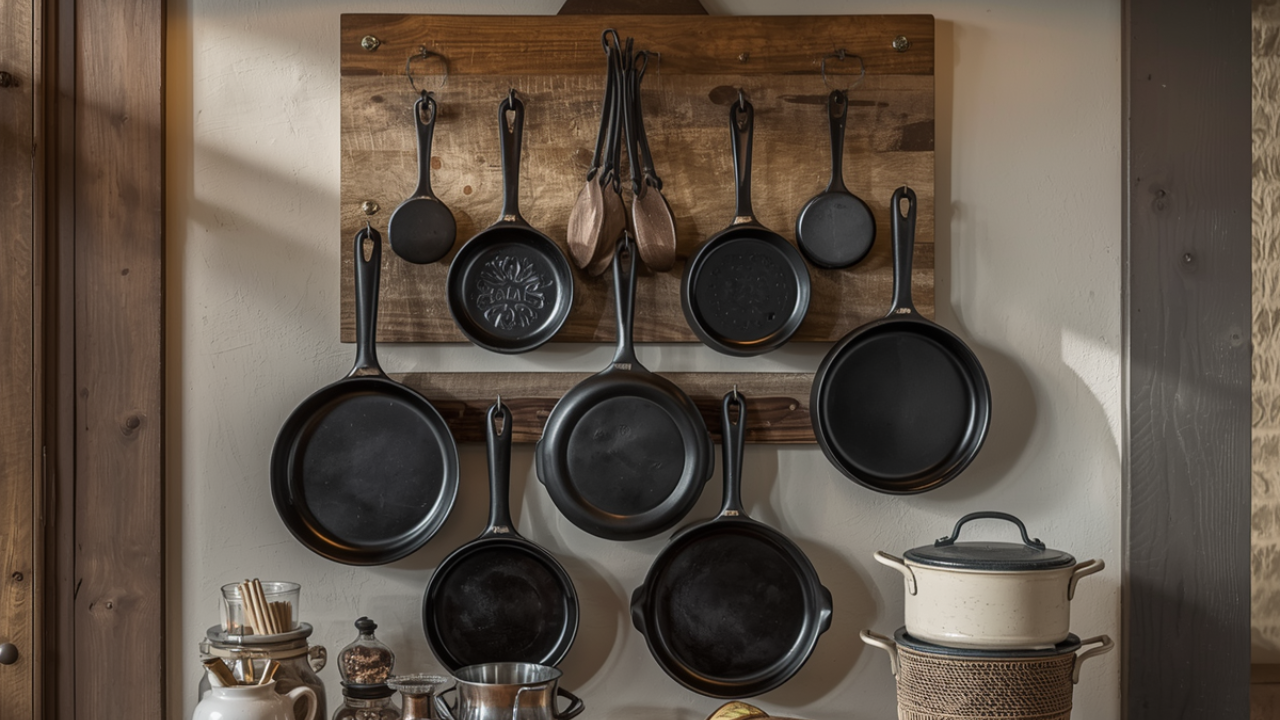
    That might mean using one section of a lower cabinet near the stove only for cast iron. It might mean one open shelf with a single attractive skillet and trivet. It might mean a wall-mounted rack if the kitchen layout supports it and the mounting is secure. The point is to shorten the distance between storage and use.

    Real-life scenario: if you make eggs in an 8-inch skillet every morning and sear meat in a 12-inch skillet several nights a week, those pans should not be living above the refrigerator or buried behind stock pots. They should be within one or two steps of the stove.

    The practical fix is to create a cookware zone. Group cast iron near the stove, baking dishes near the oven, and food storage near prep areas. Kitchen organization works better when it follows behavior, not just categories.

    3. Ignoring Surface Protection Between Pans

    Many people focus only on where to store cast iron and forget how to store it.

    Even well-seasoned skillets can get nicked, scratched, or rubbed unnecessarily when heavy pans are shoved together. This is especially common when lids, grill pans, and skillets share the same cabinet without any buffer.

    The fix does not need to be complicated. If you do stack some pieces, use simple pan protectors, folded dish towels, or thin cork separators between them. In a drawer, a wood riser or divider can help keep heavier edges from banging together. On open shelving, a small rack keeps pieces upright and separated instead of piled.

    This matters even more if you have enameled cast iron mixed into the same area. Bare cast iron is forgiving. Enameled surfaces are not.

    Real-world example: if you keep a large skillet, a smaller skillet, and a cast-iron lid together in one cabinet, slipping a soft separator between each piece prevents scraping and makes the stack easier to handle. It is a small change, but it makes the storage feel intentional instead of chaotic.

    4. Using Pretty Storage That Cannot Handle Real Weight

    This is where style often gets people into trouble.

    There are plenty of kitchen organizers that look good online but are not built for cast iron. Lightweight wire shelves bow. Adhesive hooks are risky. Decorative hanging bars may work for utensils, but not for a 10-pound skillet.

    The practical rule is simple: cast-iron storage requires real load-bearing support. That means solid mounting into studs for wall racks, heavy-duty cabinet organizers, stable shelf risers, and turntables only for appropriate lighter items nearby, not for the skillets themselves.

    I would rather see a plain, sturdy cabinet rack than a beautiful hanging setup that makes you nervous every time you walk by it.

    If you want your storage to look good, focus on materials that feel grounded in a kitchen: wood shelves, black metal racks, or neutral organizers that blend into the cabinet. Good kitchen organization does not need to be flashy. It needs to be dependable.

    Real-world example: an open wooden shelf with two frequently used skillets displayed upright can look intentional and warm. A flimsy over-the-door organizer holding heavy cast iron usually looks temporary because it is temporary.

    5. Letting “Overflow” Become Permanent Clutter

    A lot of cast iron clutter starts with one sentence: I’ll just put this here for now.

    That extra skillet on the counter. The griddle on top of the microwave. The Dutch oven lid is leaning beside the cutting boards. These are usually not permanent choices. But in real kitchens, temporary storage becomes the system unless you interrupt it.

    This happens because there is no assigned home for the less-used pieces. The everyday skillet gets priority. Everything else floats.

    The fix is to divide your collection into daily-use, weekly-use, and occasional-use. Your daily-use pieces deserve prime storage. Weekly-use pieces can go in the same zone but farther back. Occasional-use items can move to a secondary cabinet or pantry shelf with sturdier support.

    If your counter currently has a utensil crock, knife block, paper towels, decorative tray, and one cast-iron skillet that never gets put away, the issue may not be the skillet. The issue may be that your counter is acting as overflow storage for too many categories at once.

    A tray can help here, but only when it defines a small intentional zone rather than collecting random clutter. For example, a small tray for oil, salt, and a spoon resting beside the stove can actually make room by reducing visual scatter. A tray piled with unrelated items just makes clutter look organized.

    6. Forgetting That Small Kitchens Need Fewer Access Points, Not More

    In smaller kitchens, the instinct is often to add more bins, more shelves, more hooks, and more gadgets. But too many storage layers can make a kitchen harder to use.

    A simpler system usually works better.

    Instead of spreading cast iron across three different places, keep it in one well-planned area. Instead of adding organizers everywhere, choose one solution that fits the size of your collection. If you only own two skillets, you do not need an elaborate storage wall. If you own six pieces, you probably do need more than one cabinet stack.

    This is another place where people overcomplicate the fix. The answer is not always more storage products. Sometimes it is one good cabinet divider, one shelf riser, and a decision to donate the pan you never use.

    That last part matters. If you have duplicate sizes you never reach for, they are not part of a smart kitchen organization system. They are just heavy clutter.

    A Simple Reset for Cast Iron Skillet Storage

    If your kitchen feels disorganized right now, this is the easiest way to reset it without turning the whole room upside down.

    Step 1: Pull out every cast-iron piece

    Gather all skillets, grill pans, lids, and griddles in one place so you can see what you actually own.

    Step 2: Sort by frequency of use

    Make three groups: use often, use sometimes, rarely use.

    Step 3: Choose one primary storage zone

    Pick the cabinet, shelf, or area closest to the stove that can safely hold the weight.

    Step 4: Add one practical support piece

    Use a vertical organizer, divider rack, or shelf riser based on your space. Do not buy five products when one will solve the problem.

    Step 5: Protect surfaces where needed

    Add pan protectors, thin towels, or separators if any pieces will touch.

    Step 6: Rehome the occasional pieces

    Move less-used items to a secondary spot that is still safe and accessible, just not premium real estate.

    Step 7: Clear the counter completely

    Only return a skillet to the counter if it is part of a deliberate daily-use setup. Otherwise, the counter should stay open for prep, not become long-term cookware parking.

    This reset works because it is realistic. It does not require a renovation, a giant pantry, or a perfectly styled kitchen. It just requires the storage to match the way you actually cook.

    Final Thought

    The best storage ideas for cast iron skillets are the ones that make your kitchen easier to use, not just nicer to photograph.

    This post may contain affiliate links. If you purchase through these links, I may earn a small commission at no additional cost to you.
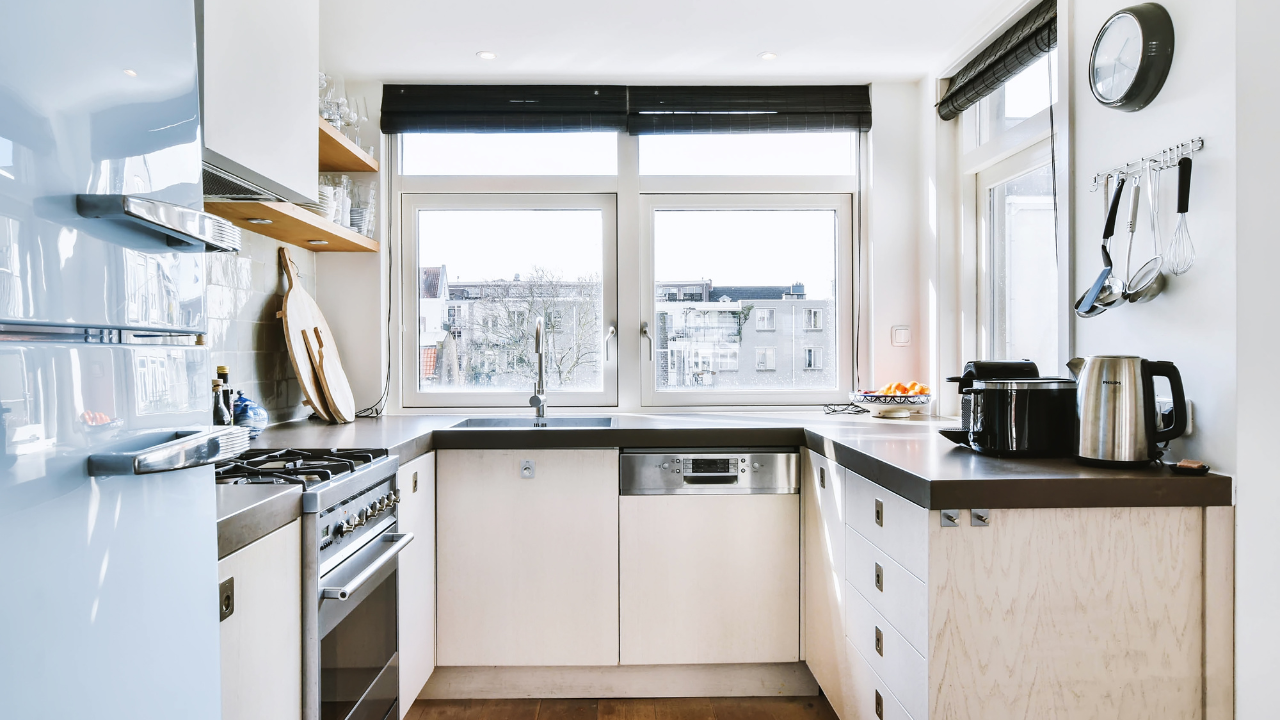
  • Kitchen Organization Hacks That Actually Work For Tiny Spaces 

    Kitchen Organization Hacks That Actually Work For Tiny Spaces 

    Small kitchens get cluttered fast because every inch has to work harder. If your counters always feel crowded, your cabinets are overstuffed, and your kitchen never quite looks clean, the problem usually is not the size of the room. It is the lack of a simple system for how the space is being used.

    The Real Reason Small Kitchens Feel So Hard to Keep Organized

    A small kitchen does not fall apart because you own too much. Most of the time, it falls apart because too many things are trying to live in the wrong places.

    That is what makes small-space kitchen organization so frustrating. You clean the counters, put things away, and within a day or two, the mess is back. The coffee pods drift out. The mail lands by the fruit bowl. The cooking oils stay out because you use them often. The dish soap, sponge, and hand soap start taking over the sink area. None of those things seems like the problem on its own, but together they create visual noise and functional clutter.

    The aha moment for most people is this: clutter is often a layout problem before it is a stuff problem.

    You do not need a picture-perfect pantry or a full cabinet makeover to fix it. You need your kitchen to support the way you actually cook, unload groceries, make coffee, pack lunches, and clean up at the end of the day.

    Budget-Friendly Kitchen Organization for Small Spaces
    Budget-Friendly Kitchen Organization for Small Spaces

    Problem 1: Your Counters Are Doing Too Many Jobs

    One of the biggest mistakes in kitchen organization is treating the countertop like open storage. In a small kitchen, that creates instant clutter because the counter becomes a landing zone for everything.

    This happens for a simple reason: counters are easy. Cabinets require opening doors. Drawers fill up. Shelves may be awkward. So the most-used items end up staying out by default.

    Here is the problem with that approach: when the counter holds appliances, food, paper clutter, and cleaning supplies all at once, the kitchen feels messy even when it is technically clean.

    The fix is to assign your counters a job limit. Not everything that gets used often deserves permanent counter space.

    A strong opinion here: most small kitchens should have no more than two daily-use zones visible on the counter. Usually, that means a coffee zone and a cooking zone, or a coffee zone and a prep zone. That is it.

    For example, if your counter has a toaster, blender, coffee maker, knife block, paper towels, oils, fruit bowl, and mail tray all out at once, the kitchen will always feel crowded. A better setup is keeping only the coffee maker and a small tray with mugs or pods together in one corner, then using a narrow tray beside the stove for oil, salt, and pepper. The toaster and blender can move into a cabinet or pantry shelf unless they are used every single day.

    Trays help because they visually contain the mess. A marble-look tray, wooden riser, or slim handled tray can make a few necessary items feel intentional instead of scattered. That is not just styling. It is a functional organization.

    Problem 2: You Are Organizing Cabinets Without Thinking About Reach

    A lot of kitchen organization advice focuses on bins, baskets, and matching containers. Those things can help, but they do not solve the deeper issue if the storage layout is wrong.

    Most cabinet clutter happens because daily-use items are not stored by frequency. People often place things where they fit, not where they make sense.

    That is why you end up crouching to reach mixing bowls, digging past serving platters to grab a skillet, or moving baking dishes every time you want a pot lid. The cabinet is technically organized, but it is annoying to use, so things stop going back where they belong.

    The practical fix is to organize by access, not category alone.

    Keep your everyday dishes in the easiest-to-reach cabinet. Put weeknight cookware closest to the stove. Store food prep tools near the area where you actually prep food. Use shelf risers inside cabinets to create vertical layers for plates, mugs, or pantry items. Add a pull-out bin or handled basket for snacks, wraps, or baking supplies so you can remove the whole category instead of shuffling things around.

    A real-life example: if your lower cabinet holds sheet pans, pots, mixing bowls, and food storage containers all in one stacked pile, you are not disorganized. You just have too many categories fighting for one shelf. Splitting that cabinet with a pan organizer for lids and baking sheets, plus one lidded bin for containers, immediately makes the same cabinet easier to use.

    The goal is not just to fit more. The goal is to create less resistance.

    Budget-Friendly Kitchen Organization for Small Spaces

    Problem 3: Your Sink Area Is Quietly Making the Whole Kitchen Look Messy

    People often focus on pantry shelves and cabinets, but in most small kitchens, the sink area is one of the biggest sources of visual clutter.

    Why? Because it collects necessary but unattractive things. Dish soap, hand soap, sponges, scrub brushes, stopper plugs, drying mats, stray cups, and whatever was rinsed but not fully put away. Even a pretty kitchen can look messy if the sink zone is chaotic.

    The fix is to stop treating the sink edge like overflow space.

    Use a compact sink caddy or a divided tray that holds only the tools you use daily. Switch to a matching soap dispenser set if your current bottles are bulky and covered in labels. If you hand-wash often, a foldable dish drying rack or over-the-sink drying mat can help because it can be put away when not needed.

    This is also where a counterintuitive insight matters: fewer things visible around the sink can make you more likely to keep it clean. People often assume they need every cleaning tool out for convenience, but visual overload makes the whole area feel harder to reset. Limiting what stays out often improves follow-through.

    If your sink corner currently holds a bottle of dish soap, hand soap, sponge, scrub brush, all-purpose spray, a candle, and a wet dish towel draped over the divider, try reducing it to a single tray with soap and one sponge holder. Put the spray under the sink. Hang the towel inside a cabinet door or on a small hook. The space will look calmer immediately.

    Problem 4: Food Storage Gets Messy Because Packaging Is Working Against You

    One of the most overlooked causes of kitchen clutter is food packaging. Bags slump. Boxes leave gaps. Individually wrapped snacks scatter. Opened items get shoved back onto shelves and disappear behind larger containers.

    This is why pantries and snack cabinets look messy so quickly, especially in small kitchens.

    The solution is not decanting everything into matching jars. That can look nice, but it is often too much work for real life. The smarter fix is selective containment.

    Use clear bins for categories that tend to spread, like snacks, breakfast items, baking ingredients, or packet mixes. Transfer only the items that truly benefit from containers, like flour, sugar, cereal, pasta, or frequently used grains. Turntables work especially well for oils, sauces, vinegars, and condiments in deeper shelves because they bring items to you instead of creating a hidden back row.

    This is where budget-friendly kitchen organization matters. You do not need an expensive pantry edit. A few clear bins, a lazy Susan, and a set of stackable containers for the messiest staples will do more than a dozen decorative baskets.

    For example, if your pantry shelf has granola bars, crackers, peanut butter, pasta boxes, and tea all mixed, the problem is not that you need prettier labels. The problem is that there is no category control. One bin for snacks, one for breakfast, and one turntable for jars and bottles creates order with very little effort.

    Budget-Friendly Kitchen Organization for Small Spaces

    Problem 5: You Keep Buying Organizers Before Fixing the Flow

    This is one of the most common small-space mistakes, and it is worth saying clearly: organizers do not create systems. They support systems.

    That means buying containers before deciding how your kitchen should function often leads to more clutter, not less. You end up with bins that do not fit, drawer dividers that waste space, and pretty baskets holding random things with no real purpose.

    The better approach is to watch your kitchen for friction points first.

    Where do things pile up? What gets left out every day? Which drawer is annoying to open? Which cabinet makes you shift three things to grab one? Those are the places that need solutions.

    Then choose products that solve specific problems. A narrow rolling cart might help if you truly have a dead gap beside the fridge. Drawer dividers make sense if utensils and tools are constantly mixing. A two-tier under-sink organizer works if that cabinet is deep and messy. But those products only help when they match an actual need.

    A strong stance: decorative organization without functional editing is a waste of money.

    If the goal is a kitchen that feels easier to use, every organizer should earn its place.

    Problem 6: You Have No Reset Routine, So Clutter Always Returns

    Even the most organized kitchen will slide backward without a reset habit. In a small space, that happens quickly because there is very little room for overflow.

    This is where many people get stuck. They do a deep clean, buy some organizers, maybe even restyle the counters, but they never create a maintenance rhythm. So the kitchen slowly fills back up.

    The fix is to create a simple kitchen reset that takes ten minutes or less and can be done at the end of the day.

    A Simple Kitchen Reset System for Small Spaces

    Step 1: Clear the counters completely.
    Move everything off the surface except the items that truly belong in your two designated daily-use zones.

    Step 2: Group by function.
    Make quick categories: coffee, cooking, cleaning, snacks, papers, storage containers, and random items.

    Step 3: Remove what does not belong in the kitchen.
    Mail, receipts, batteries, tools, kids’ papers, and unrelated extras should leave the room immediately.

    Step 4: Rebuild only the visible zones you actually use.
    Set up your coffee corner on one tray. Set up your cooking essentials on another tray or small riser near the stove.

    Step 5: Fix one cabinet and one drawer.
    Do not try to organize the whole kitchen in one day. Choose the worst drawer and the most frustrating cabinet first.

    Step 6: Add containment where the clutter repeats.
    Use one or two bins, a turntable, a shelf riser, or a drawer divider only after you see where categories keep collapsing.

    Step 7: Do a nightly three-minute reset.
    Put away dishes, clear paper clutter, return items to trays or bins, wipe counters, and reset the sink.

    That last step matters most. The kitchen does not stay organized because it is perfect. It stays organized because it is easy to reset.

    What a Functional Small Kitchen Actually Looks Like

    A well-organized small kitchen is not empty. It’s edited.

    It might still have a coffee maker on the counter. It may still have a wooden utensil crock by the stove. Or it might even have a tray with oils and salt out in the open. The difference is that each visible item has a reason to be there.

    If your kitchen works hard every day, it does not need to look like a showroom. It needs to support real life.

    That means your blender can live in a cabinet if it is only used twice a week. Your snack bin should be easy for kids to reach if that makes mornings smoother. Your prettiest canisters should not take priority over the storage setup that actually helps you cook dinner without frustration.

    Function first. Style second. That is what makes a kitchen feel calm.

    A small kitchen does not need more space to feel better. It needs clearer decisions about what stays out, what gets stored, and what actually earns room in your daily routine.

    This post may contain affiliate links. If you purchase through these links, I may earn a small commission at no additional cost to you.

  • Why Most Kitchen Counters Always Look Cluttered

    Why Most Kitchen Counters Always Look Cluttered

    If your kitchen counters always look cluttered, no matter how often you clean them, the problem usually isn’t mess-it’s how the space is being used. Layout, visibility, and what you allow to stay on the counter all determine whether your kitchen feels calm or constantly in the way.

    Why This Keeps Happening (Even When You’re Trying to Stay Organized)

    There’s a point most people hit where they’ve wiped everything down, moved things around, and still feel like the kitchen doesn’t look right.

    Not messy. Just… off.

    That’s because clutter isn’t always about how much is there. It’s about how many decisions your eye has to process at once.

    When your counters don’t have structure, everything competes for attention-even if it’s all useful.

    Why Most Kitchen Counters Always Look Cluttered

    1. You’re Letting Convenience Decide What Stays Out

    This is how clutter builds without you noticing.

    You use something → it stays out
    You use something else → it joins it
    Eventually, everything you use regularly lives on the counter

    Why this happens

    Convenience wins in the moment.

    But over time, convenience turns into accumulation.

    What actually works

    You need a limit.

    Not everything useful deserves counter space.

    Real scenario

    If your counter has:

    Even if you use all of them, that alone will make your kitchen feel crowded.

    The Fix

    Pick 1-2 appliances max for the counter.

    Everything else gets stored.

    That single decision usually changes how the entire kitchen feels.

    2. You’re Placing Items Instead of Organizing Them

    Most people don’t organize their counters.

    They place things wherever there’s room.

    That’s why even clean kitchens feel scattered.

    Why this happens

    There’s no defined system.

    Items are reacting to space, not assigned to it.

    What actually works

    Everything that stays out needs to belong to a group.

    Real scenario

    Instead of:

    • soap near the sink
    • sponge on the other side
    • brush somewhere else

    You create:

    • one contained sink area

    A simple tray or sink caddy immediately fixes this by turning multiple loose items into one organized section.

    3. Everything Is Competing at the Same Level

    Flat layouts are one of the biggest reasons counters feel cluttered.

    When everything sits at the same height:

    • nothing stands out
    • Everything blends
    • Your eye keeps scanning

    Why this happens

    Most items are designed to sit flat, so without intention, everything ends up at the same level.

    What actually works

    Create vertical variation.

    Example

    This creates separation without adding more items.

    A simple wooden cutting board leaned against the backsplash can completely change how that section of the counter feels.

    4. Visible Packaging Is Creating More Clutter Than You Think

    Even when your counters are “organized,” packaging can undo everything.

    • bright labels
    • plastic bottles
    • mismatched materials

    Why this happens

    Packaging is designed to stand out on shelves, not blend into your home.

    What actually works

    Replace only what’s visible.

    Real scenario

    If your sink area has:

    • a bright dish soap bottle
    • a bulky sponge holder
    • random containers

    That entire section will feel cluttered, even if it’s clean.

    Switching to:

    makes the space feel finished instead of busy.

    5. You’re Trying to Fix the Problem by Adding More

    This is where most people go wrong.

    Something feels off → you add decor → it improves slightly → then gets worse

    Why this happens

    You’re solving the feeling, not the cause.

    What actually works

    Edit first.

    Always.

    Strong rule

    If your counter feels cluttered, removing 20-30% of what’s on it will almost always improve it more than adding anything.

    Why Most Kitchen Counters Always Look Cluttered

    6. There’s No Defined Purpose for Each Section

    When counters don’t have a purpose, they reset themselves daily.

    Things move. Items drift. Clutter comes back.

    Why this happens

    There’s no structure guiding where things belong.

    What actually works

    Create simple zones:

    • coffee area
    • prep space
    • sink zone

    Real scenario

    If your coffee supplies are spread across the counter, they’ll always expand.

    But when they’re contained to one defined space, they stay controlled.

    Using a small tray or organizer for a coffee setup keeps everything contained and prevents it from spreading.

    The 10-Minute Reset That Actually Works

    If your kitchen feels off and you don’t know why, do this:

    1. Clear everything off your counters
    2. Clean the surface completely
    3. Put back only what you use daily
    4. Group those items into 1–2 sections
    5. Leave space

    This works because it forces decisions instead of letting things accumulate.

    A Better Way to Think About Your Counters

    Most people ask:

    “What should I put on my counters?”

    A better question is:

    “What would I remove if I had to simplify this?”

    That shift alone leads to better decisions.

    A kitchen that feels clean isn’t empty.

    It’s intentional.

    Fewer items.
    Clear purpose.
    Better placement.

    Once those are in place, your kitchen stops working against you and starts working the way it should.

    Affiliate Disclaimer

    This post may contain affiliate links. If you purchase through these links, I may earn a small commission at no additional cost to you.

  • How to Decorate Kitchen Counters (Simple Ideas That Actually Work)

    How to Decorate Kitchen Counters (Simple Ideas That Actually Work)

    If you’ve been searching for how to decorate kitchen counters, chances are your space feels either too cluttered… or empty.

    And somehow, no matter what you try, it just doesn’t feel finished.

    The truth is, decorating your kitchen counters isn’t about adding more.

    It’s about choosing the right pieces-and keeping it simple.

    Right now, homeowners are moving toward cleaner, more functional kitchens that feel calm and easy to maintain, instead of overly styled spaces.

    So if you’ve been overthinking it, this will help.

    These are simple, practical ideas you can actually use-no big projects, no stress.

    1. Start by Clearing Everything Off

    Before you decorate anything, clear your counters completely.

    This gives you a fresh starting point.

    Most kitchens feel cluttered, not because they have too much decor, but because nothing is intentional.

    Start clean. Then build from there.

    2. Choose One “Anchor Area.”

    Instead of decorating the entire counter…

    Pick one section.

    This could be:

    • next to the stove
    • beside the sink
    • a corner space

    Focusing on one area keeps things simple and prevents clutter.

    3. Use a Tray to Create Structure

    If you don’t know where to start, start with a tray.

    It instantly creates a “zone” on your counter.

    You can place:

    • oils
    • salt and pepper
    • a small plant

    Grouping items makes everything look more organized and styled.

    4. Mix Function with Decor

    The best kitchen counters don’t just look good-they work.

    Use items you already use daily:

    This keeps your kitchen practical while still feeling styled.

    5. Add Something Natural

    Kitchens feel better when they’re not all hard surfaces.

    Try adding:

    • a small plant
    • greenery
    • a bowl of fruit

    Natural elements soften the space and make it feel more inviting.

    Warm tones and organic materials are trending right now because they make kitchens feel more comfortable and lived-in.

    6. Keep Your Color Palette Simple

    Too many colors = cluttered feeling.

    Stick to:

    • neutrals
    • wood tones
    • black/white

    This makes your counter feel clean and cohesive.

    7. Upgrade Everyday Items

    This is one of the easiest upgrades.

    Swap:

    • plastic soap bottles
    • random containers

    For:

    Small changes like this instantly make your kitchen feel more put-together.

    A simple glass or ceramic soap dispenser instantly makes your sink area feel more put-together.

    How to Decorate Kitchen Counters

    8. Don’t Fill Every Space

    You don’t need something everywhere.

    Leaving space empty is what makes everything else stand out.

    Clean space = calm feeling.

    9. Use Height for Visual Interest

    If everything is the same height, it feels flat.

    Mix:

    This adds dimension without adding clutter.

    10. Keep It Easy to Maintain

    This might be the most important part.

    If it’s hard to clean around…

    You won’t keep it.

    The best kitchen counter decor ideas are the ones you can live with every day.

    Final Thoughts

    If you’ve been wondering how to decorate kitchen counters, the answer is simpler than you think.

    You don’t need more stuff.

    You need:

    • fewer items
    • better placement
    • a little intention

    Start small.

    Pick one area.

    And build from there.

    Shop This Look

    If you want to recreate this simple kitchen counter setup, here are a few pieces that work really well together:

    Affiliate Disclaimer

    This post may contain affiliate links, which means I may earn a small commission if you purchase through my links-at no extra cost to you. I only share products and ideas that I genuinely believe will help you create a home that feels simple, functional, and beautiful.

  • 10 Kitchen Counter Decor Ideas (Simple & Beautiful)

    10 Kitchen Counter Decor Ideas (Simple & Beautiful)

    If your kitchen counters always feel a little… off, you’re not alone.

    They’re either too cluttered, too empty, or just don’t have that clean, finished look you see all over Pinterest.

    The good news?

    You don’t need to remodel your kitchen, buy all new cabinets, or start a big project.

    In fact, most people right now are actually moving away from full renovations and focusing on small, simple updates that make a space feel better right away.

    That’s exactly what we’re doing here.

    These are simple, easy kitchen counter decor ideas that you can try today-no stress, no overthinking, just small changes that make a big difference.

    If you’ve been searching for kitchen counter decor ideas, you’re not alone.

    1. Start with a Clean, Clear Surface

    Before you add anything… take everything off.

    Seriously.

    Most kitchens feel “off” not because they need more decor, but because they need less.

    Clear your counters down to only what you actually use daily.

    Think of it as giving yourself a fresh, blank canvas.

    Everything you add back after this will feel more intentional.

    Kitchen Counter Decor Idea: Use a Cutting Board

    2. Kitchen Counter Decor Idea: Use a Cutting Board

    This is one of the easiest upgrades you can make.

    Lean a wooden cutting board against your backsplash or wall.

    That’s it.

    It adds:

    • warmth
    • texture
    • a natural, cozy feel

    And it’s something you’ll actually use.

    Natural materials like wood or bamboo are trending because they make kitchens feel softer and more inviting, not cold or sterile.

    3. Kitchen Counter Decor Idea: Use a Simple Tray

    If your counter feels messy, this fixes it immediately.

    Use a tray to group items together.

    For example:

    • olive oil
    • salt + pepper
    • a small plant

    Instead of looking like clutter, it suddenly looks styled.

    This is one of those small changes that make everything feel intentional.

    4. Add a Bowl of Fresh Produce

    A bowl of lemons. Apples. Even avocados.

    It sounds simple, but it works.

    It brings:

    • color
    • life
    • movement

    And it makes your kitchen feel lived-in in the best way.

    It’s also something you’ll actually use, which is key.

    The best decor is the kind that earns its place.

     Add a Bowl of Fresh Produce

    5. Upgrade Your Soap Dispenser

    This one is small… but powerful.

    Swap out your plastic soap bottle for something simple and neutral.

    Think:

    • glass
    • ceramic
    • matte black

    It instantly makes your sink area feel cleaner and more put-together.

    Little details like this matter more than you think.

    6. Use a Utensil Holder (But Keep It Simple)

    A small crock or container with wooden utensils can add texture and warmth.

    But keep it minimal.

    You don’t need:

    • 20 utensils
    • random colors
    • clutter

    Just a few clean, simple pieces.

    Again, this is about curating, not crowding your space.

    7. Stack a Few Cookbooks

    If you love cooking (or just love the look of it), this is an easy win.

    Stack 2-3 cookbooks on the counter.

    You can:

    • leave them flat
    • stand one upright

    It adds personality without trying too hard.

    And it makes your kitchen feel a little more personal and lived-in.

    8. Add a Small Plant or Greenery

    Nothing brings a space to life faster than greenery.

    You don’t need anything complicated.

    Try:

    • a small herb plant
    • a simple vase with greenery
    • even faux stems

    This softens the space and makes everything feel calmer.

    And right now, bringing natural elements indoors is one of the biggest trends in home design.

    Add a Small Plant or Greenery

    9. Use Matching Canisters or Jars

    If you keep things like:

    • coffee
    • sugar
    • flour

    On your counter, upgrade the containers.

    Matching jars instantly make things feel cleaner and more organized.

    Instead of looking like storage…

    It becomes part of your decor.

    10. Leave Some Space Empty

    This might be the most important one.

    Not every inch of your counter needs something on it.

    In fact, leaving space empty is what makes everything else look better.

    Designers talk about this all the time:

    It’s not about adding more-it’s about choosing what stays.

    Let your counter breathe.

    Final Thoughts

    Your kitchen doesn’t need a full makeover to feel better.

    Most of the time, it just needs:

    • a little less clutter
    • a few intentional pieces
    • and a simple reset

    That’s it.

    Start with one or two of these ideas.

    Try them today.

    And see how different your kitchen feels by tonight.

    These kitchen counter decor ideas are designed to be simple, practical, and easy to use in any home.

    Affiliate Disclaimer

    This post may contain affiliate links, which means I may earn a small commission if you purchase through my links, at no extra cost to you. I only share products and ideas that I genuinely believe will help you create a home that feels simple, functional, and beautiful.