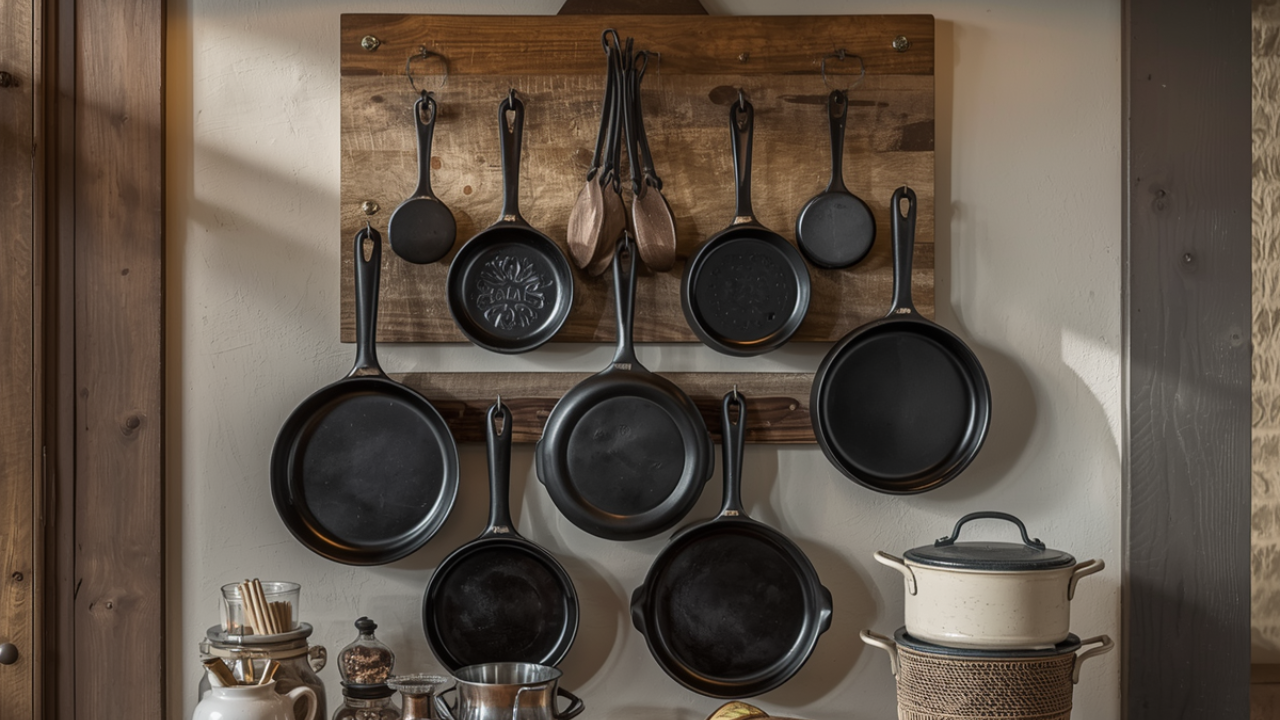
Cast iron skillets are useful, durable, and worth keeping within reach, but they can also create real kitchen storage problems. If you have been searching for storage ideas for cast iron skillets, cast iron pan organization, or ways to store heavy pans in a small kitchen, the goal is not just to hide them. The goal is to store them in a way that protects your kitchen from clutter and makes cooking easier.
Why Cast Iron Storage Becomes a Kitchen Problem So Fast
Cast iron is one of those kitchen staples that sounds simple until you actually live with it.
A single skillet is manageable. Two or three skillets, a grill pan, and maybe a Dutch oven lid or griddle later, and suddenly you have a heavy, awkward stack that does not fit the way regular cookware does. That is where most kitchens start to feel messy. It is not always because there is too much stuff. It is because the storage system was never designed for heavy pieces that need easy access.
That is also why a lot of cast-iron storage advice falls flat. It tends to focus on what looks nice instead of what works when you are pulling a skillet out on a busy weeknight. A beautiful kitchen is great. A kitchen that makes dinner easier is better.
My strong opinion on this is simple: if your cast-iron storage makes you lift three heavy pans just to reach the one you actually use, that is not organization. That is delayed frustration.
1. The Biggest Mistake: Stacking Every Piece in One Deep Cabinet
This is the default method in a lot of homes because it feels efficient. Put every skillet in one lower cabinet, stack them by size, and call it done.
The problem is weight and friction. Cast iron is heavy, and stacked cast iron creates a domino effect. The pan you need is rarely the one on top. So every meal starts with moving multiple skillets, trying not to scrape seasoning, and figuring out where to set the others while you cook.
If your counter has a toaster, blender, and coffee maker all out already, now you also have two heavy skillets temporarily sitting on the only clear prep space. That is how storage problems turn into cooking problems.
A better fix is to stop treating cast iron like stackable lightweight cookware. Use a vertical pan organizer inside a lower cabinet instead. A sturdy metal divider rack lets each skillet stand in its own slot, which means you slide one out instead of unstacking the whole collection.
Real-world example: if you have a 12-inch skillet, a 10-inch skillet, and a grill pan you use regularly, store them vertically in order of use rather than by size. The skillet you reach for most should be the easiest one to grab, even if it is not the smallest.

2. Keeping Cast Iron Too Far Away From the Stove
A lot of kitchens technically have enough storage, but the wrong items are in the wrong zones.
Cast iron is not specialty cookware for most people who own it. It is daily-use cookware. So storing it in the far pantry cabinet, garage overflow shelf, or high upper cabinet creates a mismatch between how often you use it and how hard it is to access.
This is where a counterintuitive insight matters: sometimes the best storage solution is not the one that hides everything best. Sometimes the better choice is to keep your most-used skillet slightly more visible if it makes the kitchen function better.
That might mean using one section of a lower cabinet near the stove only for cast iron. It might mean one open shelf with a single attractive skillet and trivet. It might mean a wall-mounted rack if the kitchen layout supports it and the mounting is secure. The point is to shorten the distance between storage and use.
Real-life scenario: if you make eggs in an 8-inch skillet every morning and sear meat in a 12-inch skillet several nights a week, those pans should not be living above the refrigerator or buried behind stock pots. They should be within one or two steps of the stove.
The practical fix is to create a cookware zone. Group cast iron near the stove, baking dishes near the oven, and food storage near prep areas. Kitchen organization works better when it follows behavior, not just categories.
3. Ignoring Surface Protection Between Pans
Many people focus only on where to store cast iron and forget how to store it.
Even well-seasoned skillets can get nicked, scratched, or rubbed unnecessarily when heavy pans are shoved together. This is especially common when lids, grill pans, and skillets share the same cabinet without any buffer.
The fix does not need to be complicated. If you do stack some pieces, use simple pan protectors, folded dish towels, or thin cork separators between them. In a drawer, a wood riser or divider can help keep heavier edges from banging together. On open shelving, a small rack keeps pieces upright and separated instead of piled.
This matters even more if you have enameled cast iron mixed into the same area. Bare cast iron is forgiving. Enameled surfaces are not.
Real-world example: if you keep a large skillet, a smaller skillet, and a cast-iron lid together in one cabinet, slipping a soft separator between each piece prevents scraping and makes the stack easier to handle. It is a small change, but it makes the storage feel intentional instead of chaotic.
4. Using Pretty Storage That Cannot Handle Real Weight
This is where style often gets people into trouble.
There are plenty of kitchen organizers that look good online but are not built for cast iron. Lightweight wire shelves bow. Adhesive hooks are risky. Decorative hanging bars may work for utensils, but not for a 10-pound skillet.
The practical rule is simple: cast-iron storage requires real load-bearing support. That means solid mounting into studs for wall racks, heavy-duty cabinet organizers, stable shelf risers, and turntables only for appropriate lighter items nearby, not for the skillets themselves.
I would rather see a plain, sturdy cabinet rack than a beautiful hanging setup that makes you nervous every time you walk by it.
If you want your storage to look good, focus on materials that feel grounded in a kitchen: wood shelves, black metal racks, or neutral organizers that blend into the cabinet. Good kitchen organization does not need to be flashy. It needs to be dependable.
Real-world example: an open wooden shelf with two frequently used skillets displayed upright can look intentional and warm. A flimsy over-the-door organizer holding heavy cast iron usually looks temporary because it is temporary.

5. Letting “Overflow” Become Permanent Clutter
A lot of cast iron clutter starts with one sentence: I’ll just put this here for now.
That extra skillet on the counter. The griddle on top of the microwave. The Dutch oven lid is leaning beside the cutting boards. These are usually not permanent choices. But in real kitchens, temporary storage becomes the system unless you interrupt it.
This happens because there is no assigned home for the less-used pieces. The everyday skillet gets priority. Everything else floats.
The fix is to divide your collection into daily-use, weekly-use, and occasional-use. Your daily-use pieces deserve prime storage. Weekly-use pieces can go in the same zone but farther back. Occasional-use items can move to a secondary cabinet or pantry shelf with sturdier support.
If your counter currently has a utensil crock, knife block, paper towels, decorative tray, and one cast-iron skillet that never gets put away, the issue may not be the skillet. The issue may be that your counter is acting as overflow storage for too many categories at once.
A tray can help here, but only when it defines a small intentional zone rather than collecting random clutter. For example, a small tray for oil, salt, and a spoon resting beside the stove can actually make room by reducing visual scatter. A tray piled with unrelated items just makes clutter look organized.
6. Forgetting That Small Kitchens Need Fewer Access Points, Not More
In smaller kitchens, the instinct is often to add more bins, more shelves, more hooks, and more gadgets. But too many storage layers can make a kitchen harder to use.
A simpler system usually works better.
Instead of spreading cast iron across three different places, keep it in one well-planned area. Instead of adding organizers everywhere, choose one solution that fits the size of your collection. If you only own two skillets, you do not need an elaborate storage wall. If you own six pieces, you probably do need more than one cabinet stack.
This is another place where people overcomplicate the fix. The answer is not always more storage products. Sometimes it is one good cabinet divider, one shelf riser, and a decision to donate the pan you never use.
That last part matters. If you have duplicate sizes you never reach for, they are not part of a smart kitchen organization system. They are just heavy clutter.
A Simple Reset for Cast Iron Skillet Storage
If your kitchen feels disorganized right now, this is the easiest way to reset it without turning the whole room upside down.
Step 1: Pull out every cast-iron piece
Gather all skillets, grill pans, lids, and griddles in one place so you can see what you actually own.
Step 2: Sort by frequency of use
Make three groups: use often, use sometimes, rarely use.
Step 3: Choose one primary storage zone
Pick the cabinet, shelf, or area closest to the stove that can safely hold the weight.
Step 4: Add one practical support piece
Use a vertical organizer, divider rack, or shelf riser based on your space. Do not buy five products when one will solve the problem.
Step 5: Protect surfaces where needed
Add pan protectors, thin towels, or separators if any pieces will touch.
Step 6: Rehome the occasional pieces
Move less-used items to a secondary spot that is still safe and accessible, just not premium real estate.
Step 7: Clear the counter completely
Only return a skillet to the counter if it is part of a deliberate daily-use setup. Otherwise, the counter should stay open for prep, not become long-term cookware parking.
This reset works because it is realistic. It does not require a renovation, a giant pantry, or a perfectly styled kitchen. It just requires the storage to match the way you actually cook.
Final Thought
The best storage ideas for cast iron skillets are the ones that make your kitchen easier to use, not just nicer to photograph.
This post may contain affiliate links. If you purchase through these links, I may earn a small commission at no additional cost to you.