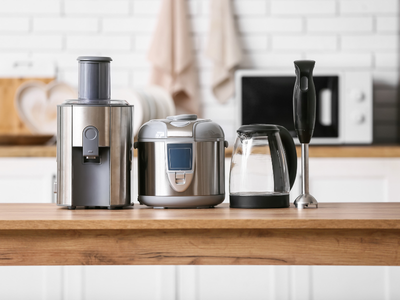
Setting up a kitchen for the first time can get expensive and overwhelming fast. If you are searching for a beginner’s guide to must-have kitchen appliances, the goal is not to buy everything at once. It is choosing practical kitchen appliances that help you cook real meals, save space, and avoid wasting money on gadgets you do not need yet.
Why Beginners Often Buy Too Much Too Fast
A lot of first kitchens get filled the same way.
Someone moves in, realizes they need “kitchen stuff,” and starts buying based on what looks useful, what other people recommend, or what seems like part of a fully stocked home. Before long, the counters are crowded, the cabinets are full, and half the appliances are barely touched.
That happens because beginner kitchens are usually built around assumptions, not routine.

At the beginning, you do not yet know what kind of cook you are going to be in that space. You may think you need a rice cooker, air fryer, toaster, blender, food processor, stand mixer, espresso machine, and slow cooker. In reality, you might end up using only three every week.
That is the counterintuitive part: a better beginner kitchen often starts with fewer appliances, not more. The smartest setup is usually a small group of useful appliances that cover the basics well.
And here is the strong opinion: beginner kitchens should be built around meals, not gadgets. If an appliance does not clearly help you make the food you actually eat, it should not be first on your list.
Start With the Jobs, Not the Appliances
The easiest mistake beginners make is shopping by product category instead of kitchen function.
A kitchen really only needs to do a handful of things well. It needs to heat, reheat, toast, boil, blend, and sometimes bake or mix. Once you understand those jobs, appliance choices get much easier.
That shift matters because it keeps you from buying duplicates without realizing it.
For example, a toaster and a toaster oven are not always both necessary. A blender and an immersion blender do not solve the same problem, but there can be an overlap. A microwave, toaster oven, and air fryer can also start competing for the same counter space if you are not careful.
A beginner kitchen works best when each appliance has a clear role.
1. Microwave
For most beginners, a microwave is still one of the most practical appliances to have.
Why? Because it handles reheating leftovers, defrosting frozen food, softening ingredients, steaming simple items, and making fast meals easier on busy days. Even people who cook a lot usually end up using a microwave regularly for small support tasks.
The reason this matters in a beginner’s kitchen is simple. You are not just learning to cook. You are also learning how to manage time, groceries, leftovers, and quick meals when life gets busy.
Real-life scenario: if you come home late from work and have cooked chicken, rice, or pasta already in the fridge, a microwave makes that meal actually convenient. Without it, even reheating food can feel like extra work, which leads to more takeout and more frustration.
A microwave is not exciting, but it solves real everyday problems. That makes it a strong starter appliance.

2. Toaster Oven
If there is one appliance that often earns its place quickly, it is a toaster oven.
A toaster oven does far more than toast bread. It can reheat pizza properly, roast vegetables, bake small portions, crisp leftovers, broil, and handle meals for one or two people without heating the whole oven. That flexibility makes it one of the best appliances for a beginner’s kitchen.
This is especially true if you are cooking in a smaller apartment, condo, or starter home where space and efficiency matter.
A lot of people buy a regular toaster first because it feels like the obvious choice. I disagree. For most beginners, a toaster oven is the better appliance because it solves more problems.
If you are trying to set up a practical kitchen on a budget, buying one appliance that can do the work of several smaller ones is usually the smarter move.
Some of our Favorite Toaster Ovens
Air Fryers/Convection Toaster Oven
3. Coffee Maker or Electric Kettle
This is where beginners need to be honest about routine.
If coffee is part of your everyday life, then a coffee maker may be one of your true must-have kitchen appliances. If you mostly drink tea, instant oatmeal, or use hot water for quick prep, an electric kettle may be the better first purchase.
The mistake is assuming every kitchen needs the same morning setup.
A bulky coffee station with pods, syrups, and accessories might look nice online, but if you only drink coffee twice a week, it may be wasting valuable space. On the other hand, if you grab coffee every morning and spend money out because making it at home feels inconvenient, a compact coffee maker can easily justify itself.
Real-life scenario: if your weekday routine includes one cup of coffee before work and maybe oatmeal on rushed mornings, either a slim coffee maker or a small electric kettle can make the kitchen more useful immediately.
Choose the appliance that matches what you actually do, not what a “complete” kitchen is supposed to have.

4. Blender
A blender becomes useful quickly if your meals include smoothies, sauces, soups, dressings, or simple meal prep.
For beginners, it is often one of the first appliances that starts expanding what the kitchen can do. A blender can help you make breakfast faster, throw together marinades and sauces, blend soups, and handle easy homemade items that feel intimidating at first without one.
That said, beginners often overbuy here.
If you make smoothies a few mornings a week, you may only need a compact personal blender. If you want to make soups, sauces, and larger batches, a more traditional blender may make more sense. What you probably do not need right away is a giant, heavy blender system with multiple attachments unless you know you will use it.
The appliance should match the cooking, not the fantasy version of the cooking.

5. Hand Mixer
A hand mixer is one of the simplest ways to make baking and mixing easier without taking up much room.
It works well for whipped cream, cake batter, brownie batter, mashed potatoes, cookies, and quick mixing tasks that can be annoying by hand. For beginners, it is a smart choice because it is affordable, compact, and far easier to store than a stand mixer.
A lot of people think they need a stand mixer to have a “real” kitchen. Most beginners do not.
That is one of those purchases that makes more sense later if baking becomes a regular habit. A hand mixer handles plenty of common kitchen jobs without demanding major counter or cabinet space.
If you bake a few times a month or want to make basic desserts and sides more easily, it earns its place.
6. Immersion Blender
This is one of the most underrated appliances for beginners.
An immersion blender, sometimes called a stick blender, lets you blend directly in a pot, bowl, or container. It works especially well for soups, sauces, dressings, and smaller blending jobs, and it stores much more easily than a full-size blender.
The reason it is so helpful for beginners is that it reduces friction. There is less transferring, less cleanup, and less hassle.
Real-life scenario: if you make a simple tomato soup or a vegetable soup and want a smoother texture, an immersion blender lets you blend it right in the pot. You do not have to pour hot liquid into a blender pitcher and then clean multiple parts afterward.
That convenience matters more than people realize, especially when someone is still building confidence in the kitchen.
7. Rice Cooker or Slow Cooker, Depending on How You Eat
This is not a mandatory first purchase for everyone, but it can be a very useful one in the right kitchen.
If rice, grains, or simple one-pot sides show up in your meals every week, a rice cooker can make sense. If you like hands-off dinners, soups, chili, shredded meat, or low-effort batch cooking, a slow cooker may be the better fit.
The key is not buying both automatically.
Beginners often feel pressure to own every “useful” appliance at once, but that usually leads to clutter. Pick the one that best supports the meals you already enjoy.
If you meal prep lunches and eat rice bowls often, a rice cooker may be the better tool. If you want to throw ingredients into a pot before work and come home to dinner, a slow cooker may solve a bigger problem.
That is how you should think about beginner appliances. Which one makes your life easier first?

8. Food Processor, Later Not First
A food processor can be incredibly useful, but for most beginners, it is not usually a first-wave appliance.
That may surprise people, because food processors do save time. They chop, shred, slice, mix, and blend many ingredients quickly. But they also take up space, require storage, and make the most sense when you are cooking from scratch frequently enough to benefit from that speed.
If you are still learning basic meals and not doing much bulk prep, sauces, homemade dips, shredded vegetables, or doughs yet, it may not need to be at the top of your list.
That is the beginner trap in a sentence: buying advanced convenience tools before you have advanced inconvenience.
Once your cooking habits grow, a food processor may absolutely become worth it. But it usually does not need to be first.
Some Other Appliances to Consider:
What Beginners Usually Do Not Need Right Away
This is where many kitchen budgets get wasted.
Most beginners do not need an air fryer, stand mixer, espresso machine, juicer, bread maker, specialty coffee tools, waffle maker, or indoor grill right away. Those appliances can be useful later, but they are rarely the foundation of a functional first kitchen.
That does not mean they are bad. It means they are often too specific too early.
A beginner’s kitchen should focus on broad usefulness. If an appliance solves one narrow problem and takes up a lot of room, it probably belongs on the “maybe later” list.
A strong opinion here: buying specialty appliances before building a solid basic kitchen is one of the fastest ways to create clutter and regret.
A Simple Reset: How to Build a Beginner Appliance Setup
If you are starting from scratch or trying to fix a kitchen that already feels cluttered, use this system.
Step 1: Write down what you eat in a normal week
Think about breakfasts, lunches, dinners, and snacks you actually make at home.
Step 2: Identify the jobs your kitchen needs to do most
Reheating, toasting, boiling water, blending, mixing, baking, or slow cooking.
Step 3: Buy for those jobs first
Start with broad-use appliances like a microwave, toaster oven, coffee maker, or kettle, and a blender if those support your real meals.
Step 4: Avoid duplicate functions
Do not buy multiple appliances that solve the same problem unless you clearly need both.
Step 5: Protect your counter space
Only appliances used often should stay out full-time. Everything else should justify its storage needs.
Step 6: Add slowly
Live in the kitchen for a while before deciding what is missing. That is usually when the next smartest purchase becomes obvious.
Step 7: Upgrade based on friction
The next appliance you buy should solve a real recurring annoyance, not just look useful online.
The Best Beginner Kitchen Is Not the Most Complete One
A good first kitchen does not need to look fully loaded.
It needs to work.
That means the best setup is often simpler than people expect. A few well-chosen appliances can cover the basics, support your routine, and leave room for the kitchen to grow with you. Once your habits become clearer, adding more tools becomes much easier and much smarter.
Beginners do not need every appliance. They need the right first appliances.
The best beginner kitchen appliances are the ones that help you cook real meals now, not the ones that make your kitchen look finished on day one.
This post may contain affiliate links. If you purchase through these links, I may earn a small commission at no additional cost to you.